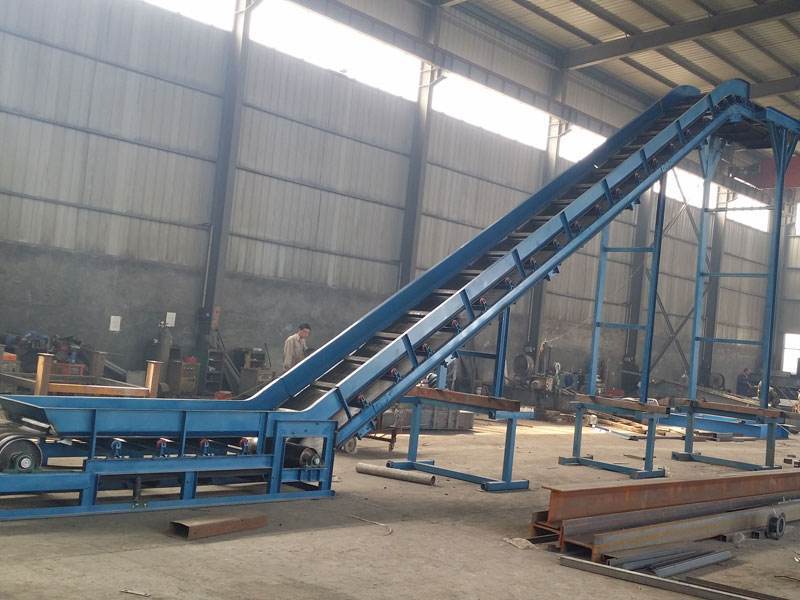
Belt conveyors feature large conveying capacity, simple structure, convenient maintenance and standardized components. They are widely used in mining, metallurgy, coal and other industries to transport bulk materials or finished products. Multiple units can be combined or matched with other conveying equipment to form horizontal or inclined conveying systems to meet the demands of operation lines of different layout types. They are suitable for transporting powdery, granular, small lump low-abrasion materials and bagged materials, such as coal, gravel, sand, cement, fertilizer and grain. The temperature of conveyed materials shall be lower than 60℃. The machine length and assembly form can be determined according to user requirements. The drive unit can be an electric drum or a driving device with a drive frame. The effective combination of assembly lines and machines fully reflects the flexibility of the equipment. The organic integration of conveying systems, follow-up fixtures, online special machines and testing equipment satisfies the assembly requirements of various products.
The manufacturing process of belt conveyor idlers is selected according to the properties of chosen materials. Each manufacturing process corresponds to one type of material. Therefore, the welding materials required for manufacturing idlers must be confirmed first; otherwise, the belt conveyor cannot be welded effectively. Meanwhile, the selection of electrode materials should also be considered. To prevent oxidation of rollers at high temperatures, shielding gas is adopted to protect the welded parts of stainless steel, nickel alloys, titanium, titanium alloys, zirconium and other materials. Attention should also be paid to avoid mixing inert gas with ambient gas or other interfering substances.
Laser welding can also be applied to belt conveyor idlers. In this case, inert shielding gas, usually helium, is required. During the welding of parts, a certain amount of argon will be added to form mixed gas for welding certain metals. Pretreatment is critical for welding. This step prepares the welding surface for easy welding. Accurate positioning of butt plates is the premise of reliable anchoring. High positioning accuracy is required during welding, and the position of workpieces shall be controlled at all times in the welding process. It is important to control air inlets to prevent other liquids or particles from affecting weld seams. Another key part of welding work is equipment maintenance, including regular replacement of aging components and removal of dirt on the inner wall of nozzles.
At present, belt conveyor idlers and long rotating assemblies supporting conveyor belts or steel wire ropes are widely adopted in various manufacturing enterprises. They eliminate the heavy work of disassembling idlers and belt conveyors and save labor and manpower in production processes. They have relatively low manufacturing costs and deliver favorable performance in production operations. They are one of the commonly used belt conveyor accessories in factories and mines.
 WhatsApp
Mobile