Large Incline Belt Conveyor
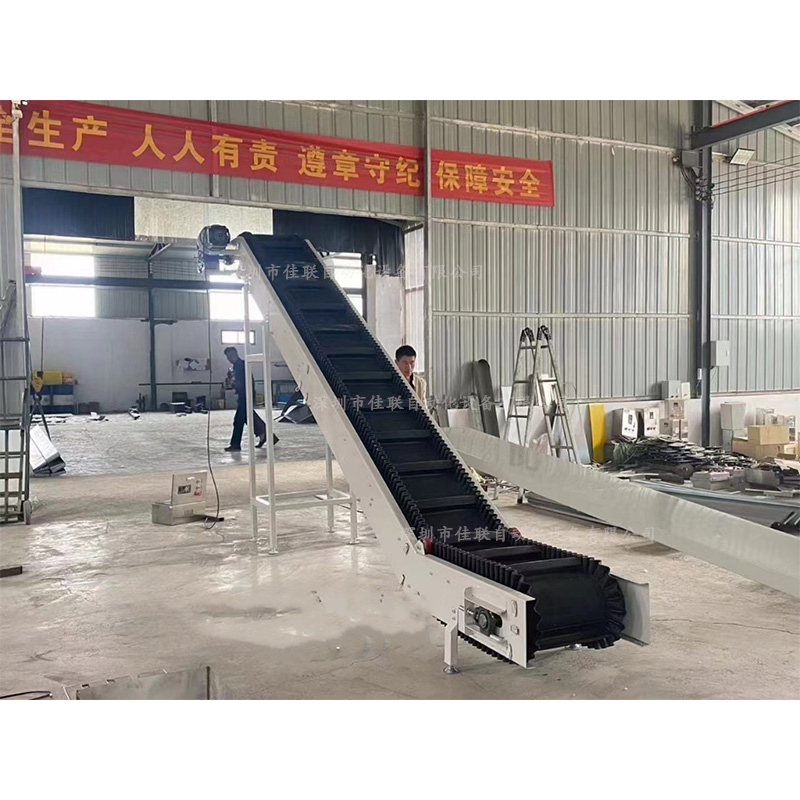
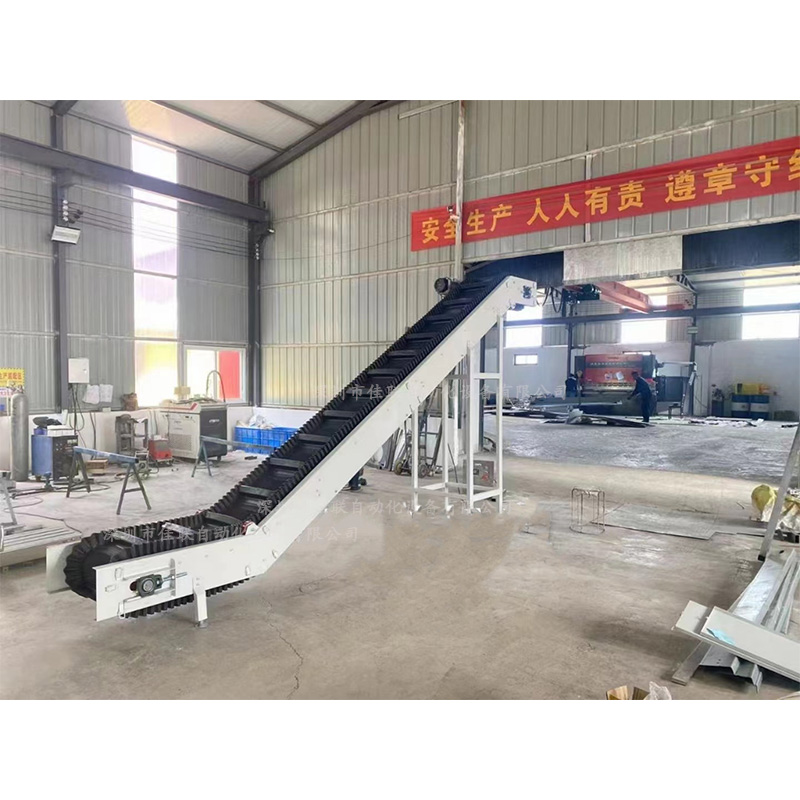
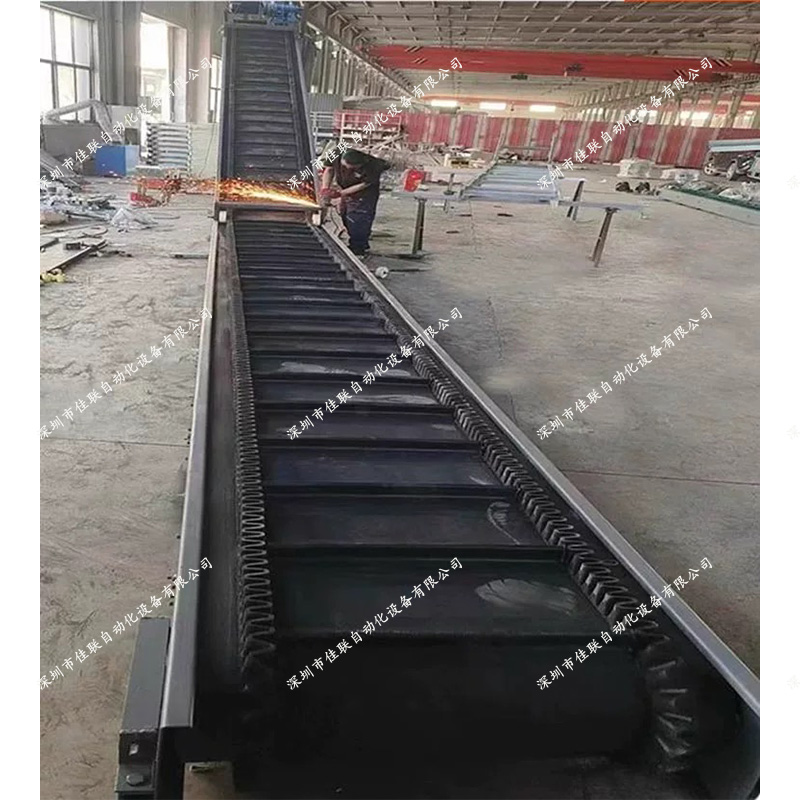
Also known as corrugated sidewall belt conveyor, it is general-purpose continuous conveying equipment for bulk materials, adopting a conveyor belt fitted with corrugated sidewalls and transverse cleats. Its conveying inclination angle ranges from 0° to 90°, so it is especially suitable for large-incline transportation. This series of belt conveyors can be applied in coal, chemical, building material, metallurgy, electric power, light industry, grain, port, ship and other industries. It can convey various bulk materials with bulk density of 0.5–2.5 t/m³ within an operating ambient temperature of -15℃ ~ 40℃. The large incline belt conveyor is mainly used for conveying crushed stone, limestone, coal, sand, clay, sintered sand powder, wood chips, grain and other materials.
Large incline belt conveyor (corrugated sidewall belt conveyor) is a new type of continuous conveying equipment. It features large conveying capacity (the throughput is 1.5~2 times higher than other conveyors); strong versatility (basic components are the same as general belt conveyors) and wide application range (suitable for crushed stone, limestone, coal, sand, clay, sintered sand powder, wood chips, grain and other materials; applicable for materials with bulk density of 500~2500 kg/m³ and lump size of about 100~250 mm). It has simple structure, easy maintenance, small floor space and low investment cost. It can replace the combined layout of ordinary conveyors and bucket elevators and be adopted directly. Thanks to convenient layout, it is widely promoted and applied in coal, electric power, metallurgy, chemical, grain and other industries.
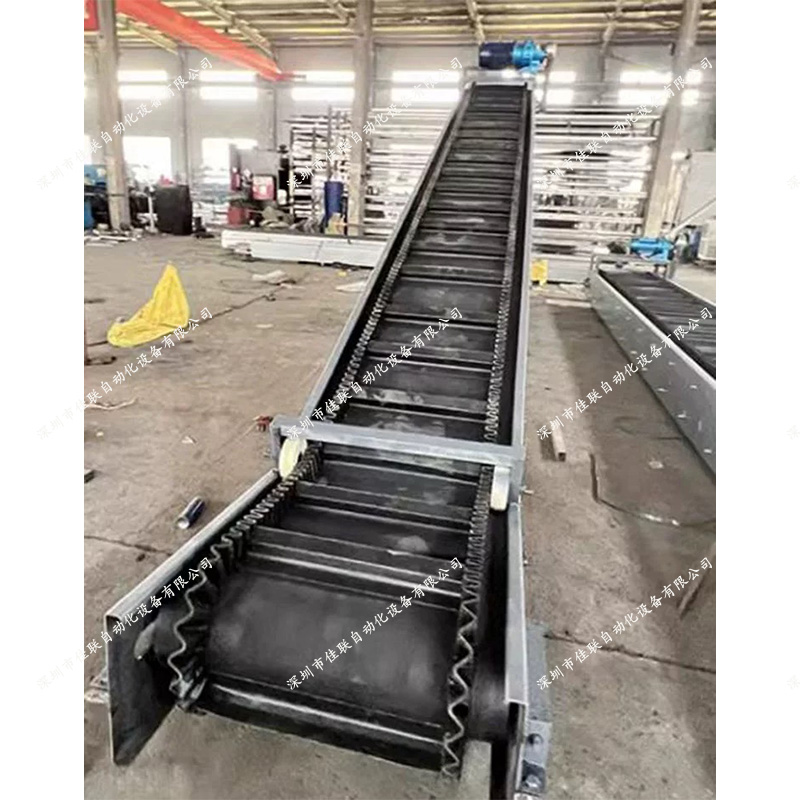
For this conveyor, flexible rubber corrugated vertical sidewalls are bonded on both sides of a flat rubber base belt. Transverse cleats with certain strength and elasticity are bonded between the sidewalls to form box-shaped buckets, so materials can be continuously transported inside the buckets. Large incline belt conveyors are widely used in coal, grain, building materials, chemical, hydropower, metallurgy and other sectors. It can convey various bulk materials with bulk density of 0.5–2.5 t/m³ under ambient temperature of -19℃ ~ 40℃. Special sidewall conveyor belts must be adopted for materials with special conveying requirements, such as high-temperature materials, materials containing acid, alkali, oil or organic solvents.
(1) The corrugated sidewall conveyor belt consists of three parts: ordinary conveyor belt as base belt, corrugated sidewalls added on both sides of the belt; transverse cleats installed horizontally between two corrugated sidewalls. There are three layout types of transverse cleats: T, C and TC. The spacing is determined according to conveying capacity, inclination angle and material lump size.
(2) Driving Device The driving device of this conveyor series is divided into open type and closed type. The open type adopts motor-reducer drive with multiple combinations, optional according to user requirements. The closed type uses motorized drum as driving pulley, featuring small footprint and easy layout, which is preferred for selection.
(3) Snubbing Device Used for angle change of conveyor belt. Normally one set is installed at the top and bottom for horizontal-incline-horizontal layout. Due to poor transverse rigidity of domestic conveyor belts, to control costs, this device is equipped with one small pressure wheel and one large pressure wheel. The small wheel presses the corrugated side, the large wheel presses the empty edge. It realizes good angle transition up to 90°, with small transition dimension and compact structure.
(4) Idlers The spacing of upper flat idlers and return flat idlers can be set from 800mm to 1500mm according to belt width, sidewall height, conveying inclination angle and material bulk density. The spacing at the feeding end is generally 200~400mm. A group of idlers can also be used in arc segments for direction change or as upper idlers.
(5) Scraper and Beating Device The scraper is installed in front of the tail bend pulley to remove materials on the non-carrying side of the conveyor belt. The beating device vibrates the belt to make materials fully fall into the hopper.
(6) Driving Pulley Driving pulleys include smooth steel pulley and rubber-lagged pulley. Closed driving device uses motorized drum as driving pulley; driving pulley of open driving device generally adopts steel plate welded structure.
(7) Backstop When the conveyor runs at a large inclination angle, a backstop shall be installed to prevent reverse slipping of the belt under full load during sudden shutdown. For closed driving device, backstops are installed on shafts at both ends inside the motorized drum. For open driving device, the backstop is mounted on the high-speed shaft inside the reducer.
(8) Take-up Device This series of conveyors are equipped with three types of take-up devices: screw take-up, carriage take-up and vertical take-up. The take-up stroke and position are selected according to required tension.
(9) Frame, Guard, Chute and Others The frame of this conveyor series consists of head frame, tail frame, intermediate frame, intermediate support legs, snubber bracket and other parts. On-site lap joint is adopted between intermediate legs and intermediate frames, intermediate frames and brackets, frames, legs, brackets and embedded steel plates. Chutes include open type and closed type. Frame dimensions can be custom-designed according to user requirements.
(10) Electrical and Protection Devices ① Protection for electrical equipment: The main circuit is equipped with voltage and current indicators, with protection functions for short circuit, open circuit, overload, phase loss, earthing as well as sound-light alarm indication. ② Protection and detection devices are selected according to the conveying process requirements of belt conveyor and operating status of the system or standalone machine.
Common protection and detection devices are as follows:
 WhatsApp
Mobile