Stainless Steel Heavy-Duty Feeding Slat Chain Conveyor
Working Principle
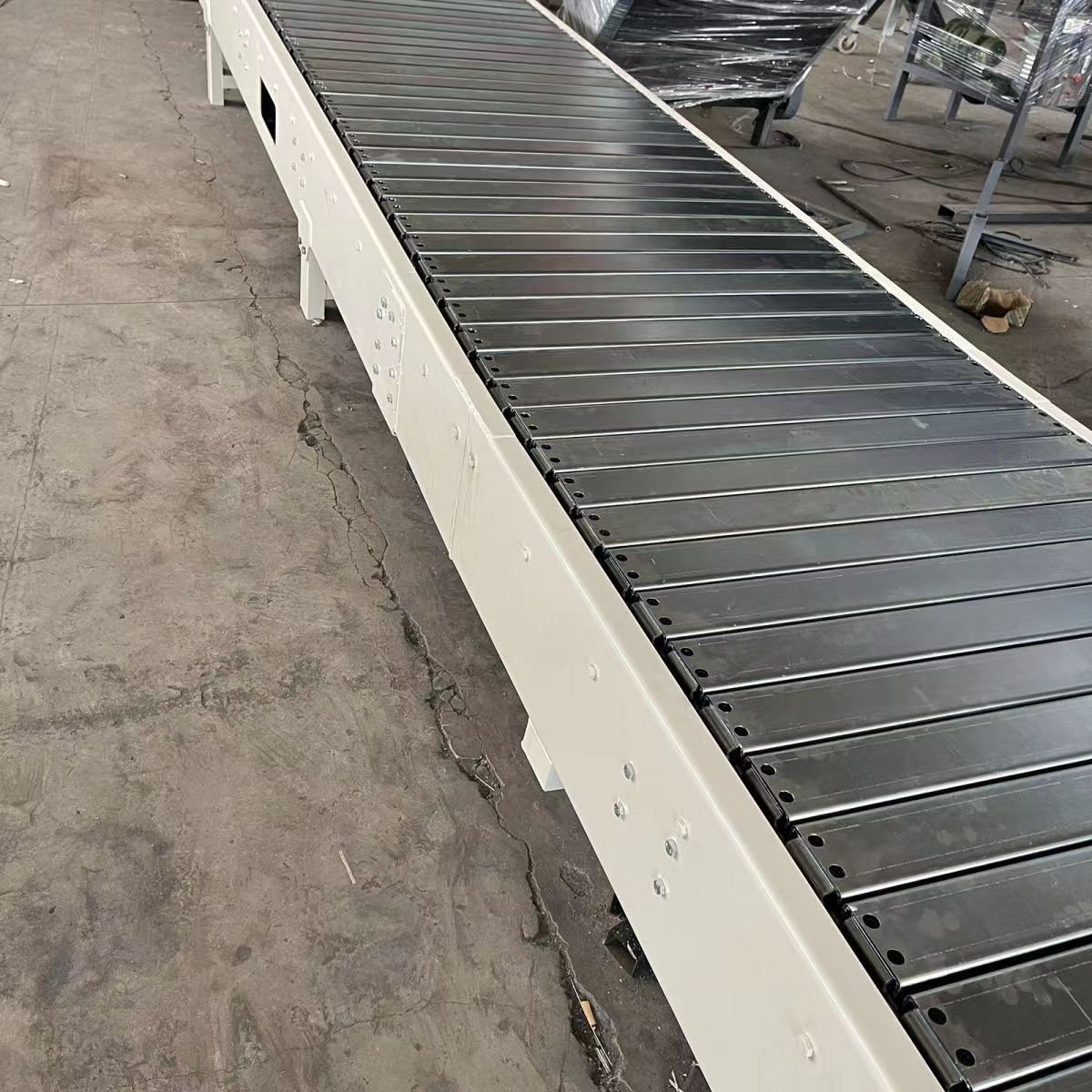
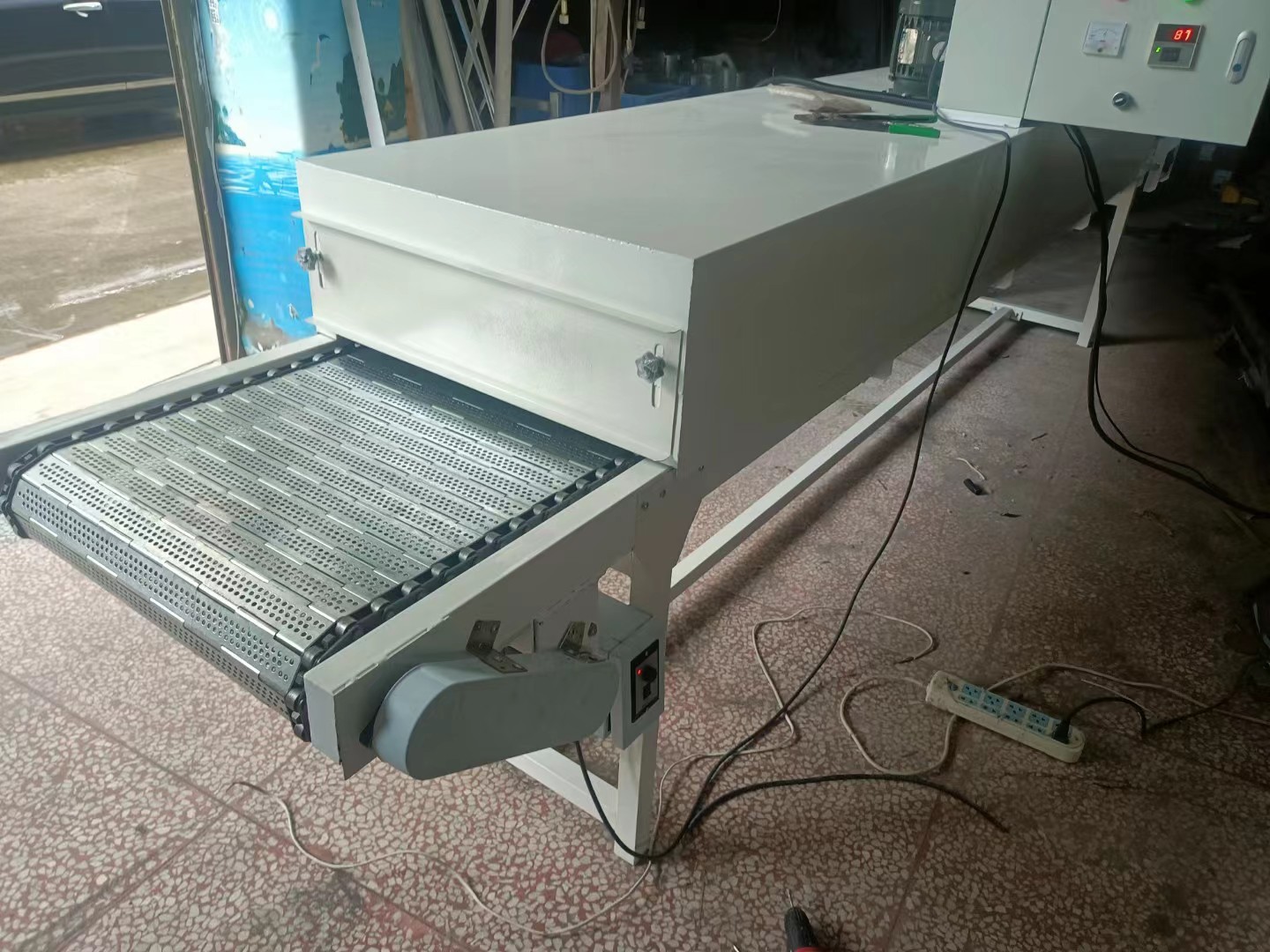
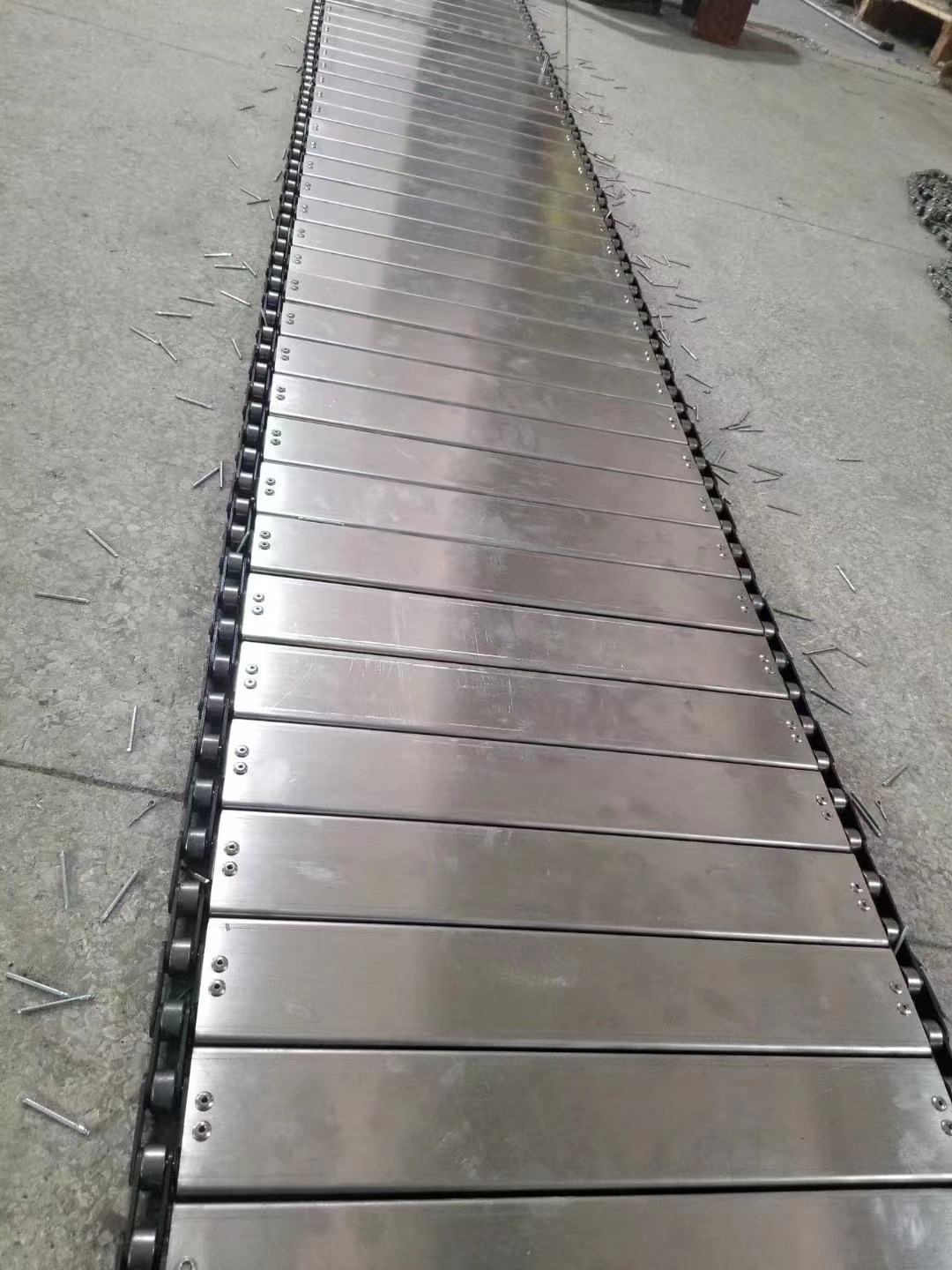
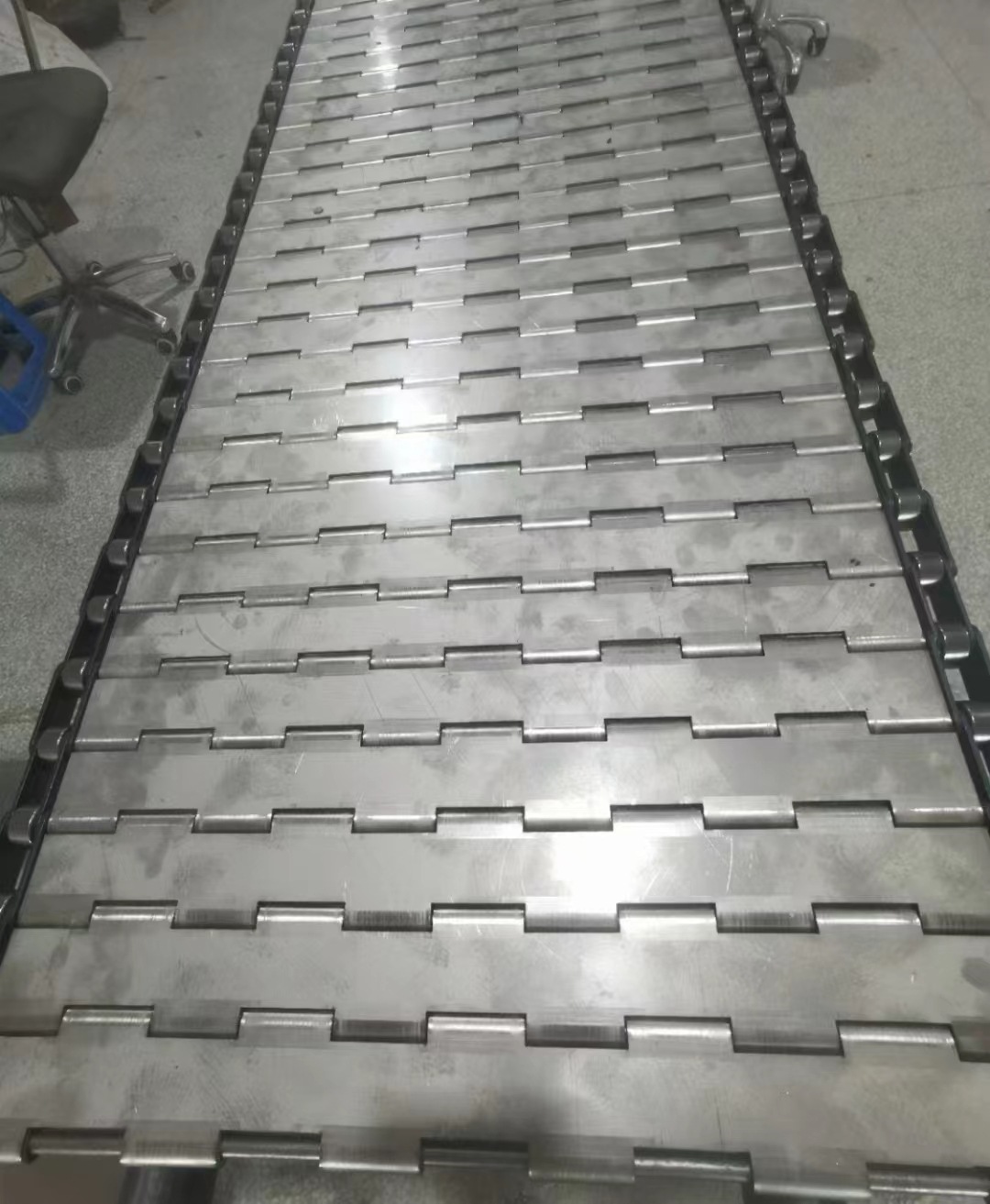
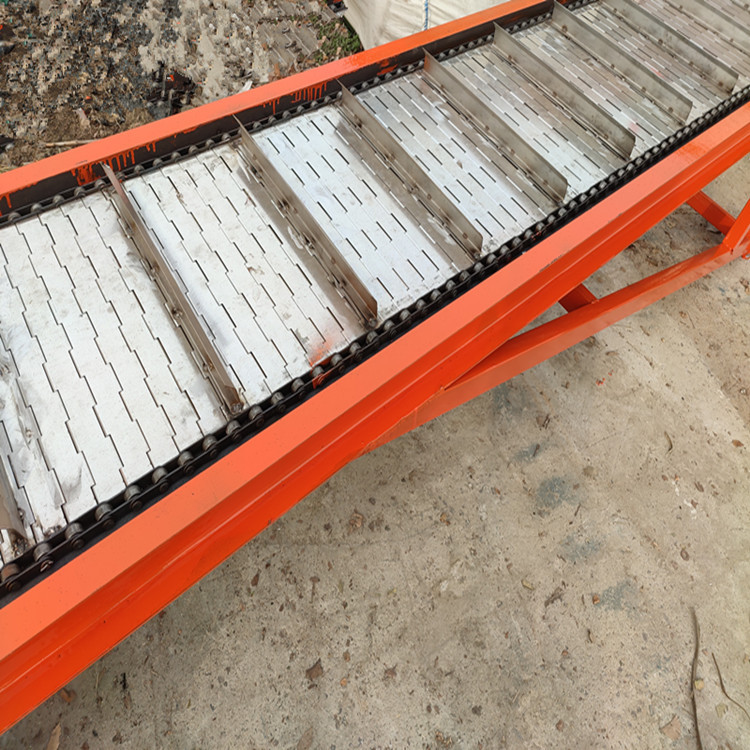
The slat chain conveyor is composed of motor, drive shaft, roller, tensioning device, sprocket, chain, bearing, lubrication system and metal slats. The circulating traction chain provides continuous power, while the metal slats act as load-bearing surfaces to carry materials. It realizes horizontal and inclined material conveying through chain circulation. Widely used in electric power, metallurgy, brewing, chemical and manufacturing industries. Custom structural design is available to match various automated production requirements.
Features
1. Smooth and flat conveying surface with low friction, ensuring stable material transition. Suitable for glass bottles, PET bottles, cans, boxes and other goods.
2. Slats are available in stainless steel and engineering plastic with complete specifications, adaptable to diverse industrial processing demands.
3. Machine frame optional: aluminum profile, carbon steel and stainless steel.
4. Large conveying capacity and strong load-bearing performance, ideal for heavy industries such as electric vehicles, motorcycles and generators.
5. Constant and precise conveying speed to achieve accurate synchronous operation.
6. Washable and immersible design, easy to clean, fully compliant with food and beverage hygiene standards.
7. Flexible layout, supporting horizontal, inclined and turning conveying on a single production line.
8. Simple structure, stable operation and low maintenance cost.
Selection Guide
Users can select slat materials and widths according to actual working conditions.
1. Select suitable flat top chain models based on conveyed materials.
2. Various flat chain types support horizontal conveying, turning, lifting and lowering.
3. The motor can be installed on the top or bottom of the frame.
4. Speed control: frequency conversion speed regulation or stepless speed reduction motor.
5. Side baffles and automatic control units can be equipped to realize full-automatic conveying.
6. Customize equipment size, material, speed and throughput according to material type, size and production demands.
 WhatsApp