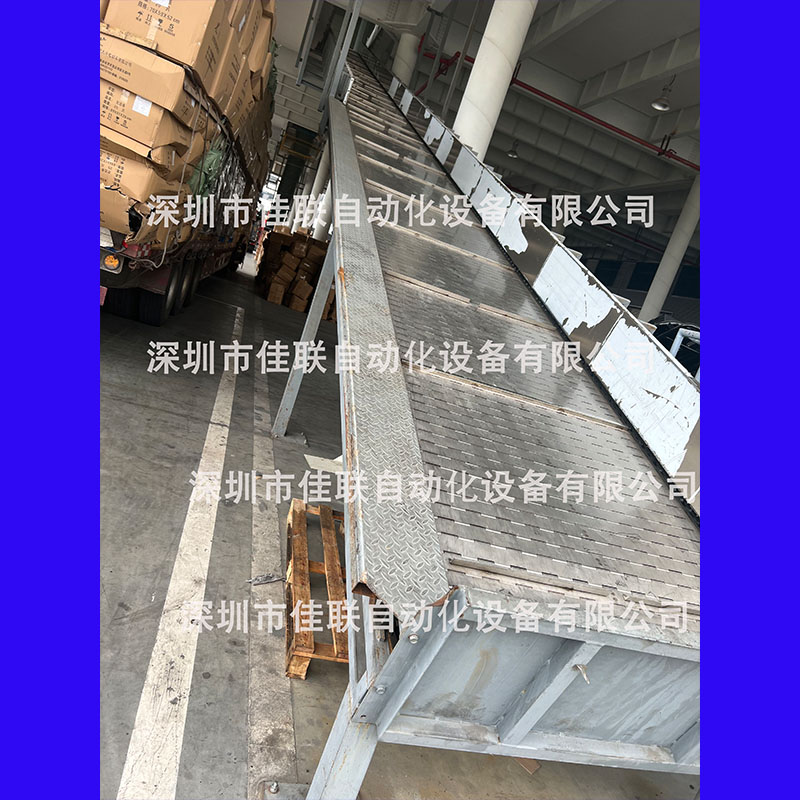
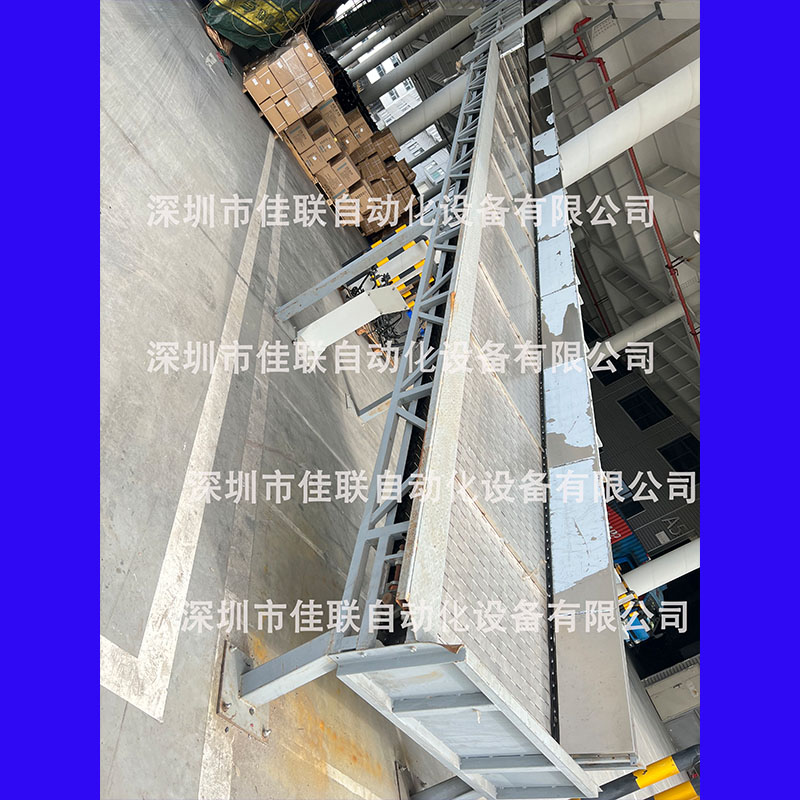
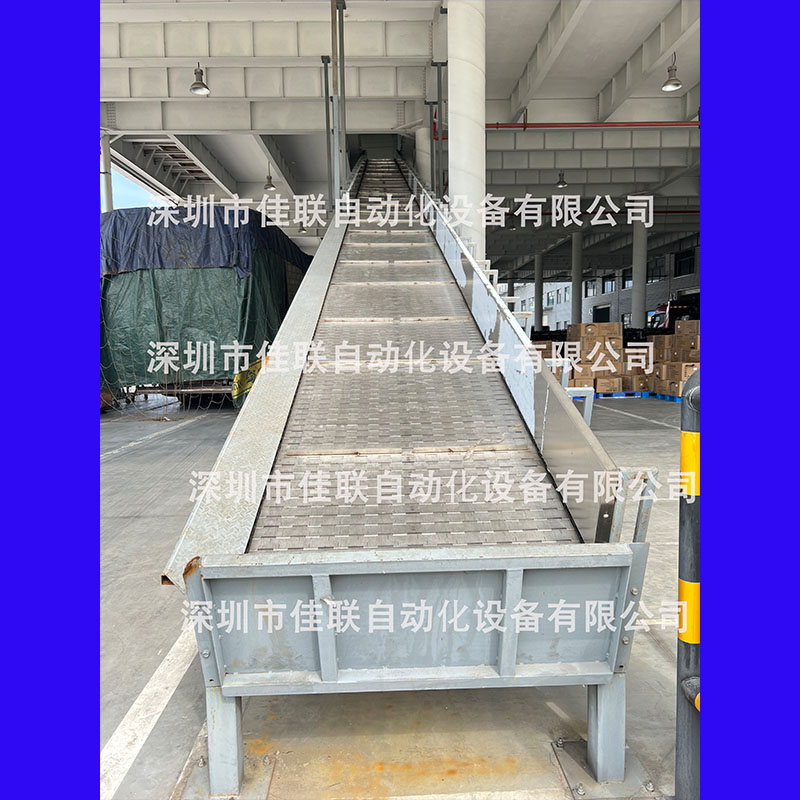
Casting slat chain inclined conveyor, horizontal-inclined stainless steel slat chain elevator with hopper slat line
The main design parameters of heavy-duty slat chain conveyors are determined through calculation based on the customer’s actual conveying distance and other information. For heavy-duty slat chain conveyors configured according to the customer’s required throughput, the theoretically calculated data must exceed the actual requirement, so that insufficient throughput will not occur during real production. When designing the conveyor, the site space and layout should also be taken into account. For instance, whether an installation platform is needed, and whether tubular or trough type is suitable according to site dimensions. Designers and sales staff need to consider all such relevant conditions.
In the design of heavy-duty slat chain conveyors, production capacity and power are determined mainly by basic parameters including material density, conveying height, conveying distance and inclination angle. There are two main categories of conveyor design parameters. The first is design constants: known or preset parameters determined by objective working conditions. The second is design variables: adjustable structural parameters to be confirmed in conveyor design.
(1) Conveying capacity: It refers to the volume of materials transported per unit time. For granular materials, it is calculated by mass or volume of materials transported per hour.
(2) Conveying speed: Higher conveying speed increases conveying capacity. However, heavy-duty slat chain conveyors running at high speed should pay attention to vibration, noise, start-up and shutdown issues. Take tubular screw conveyors as an example; the conveying speed shall not be too...
 WhatsApp
Mobile