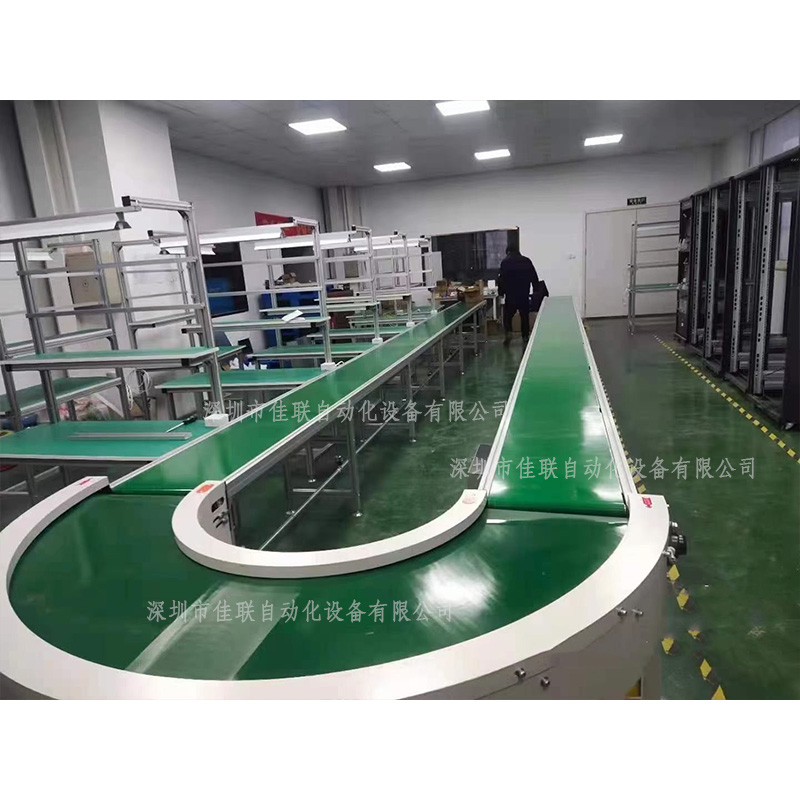
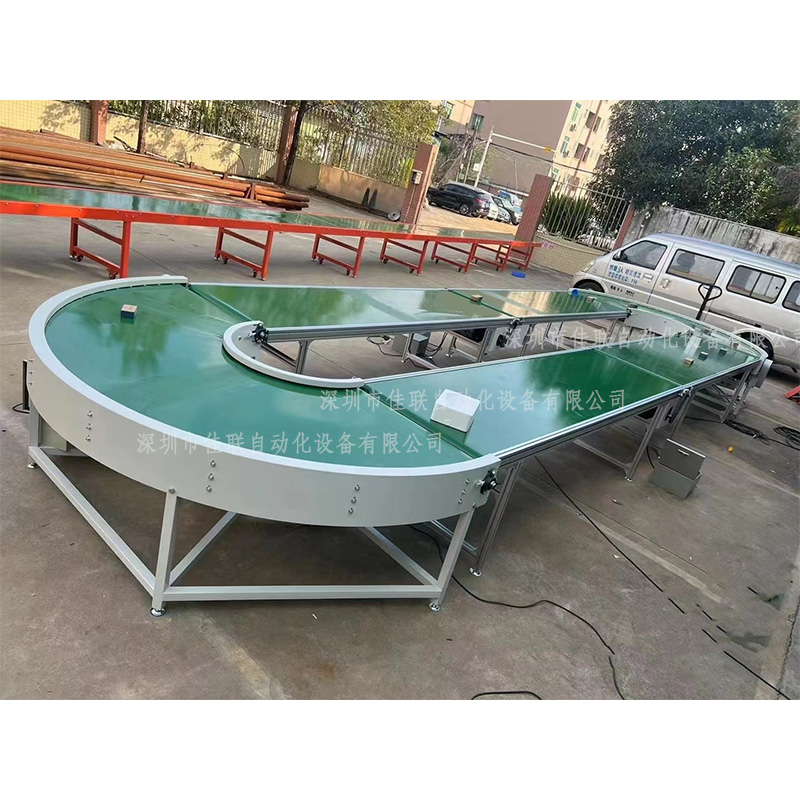
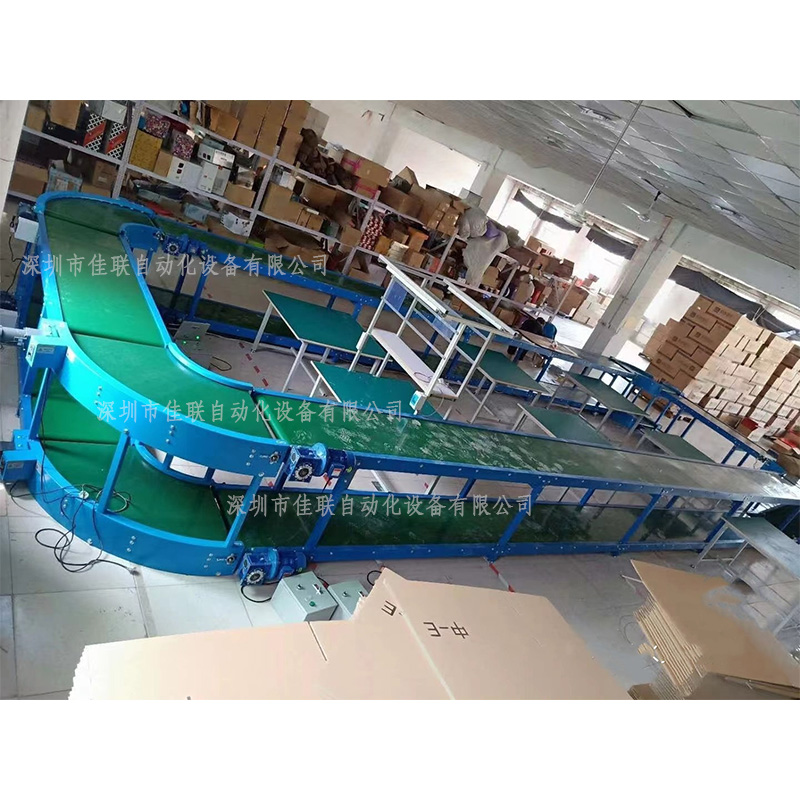
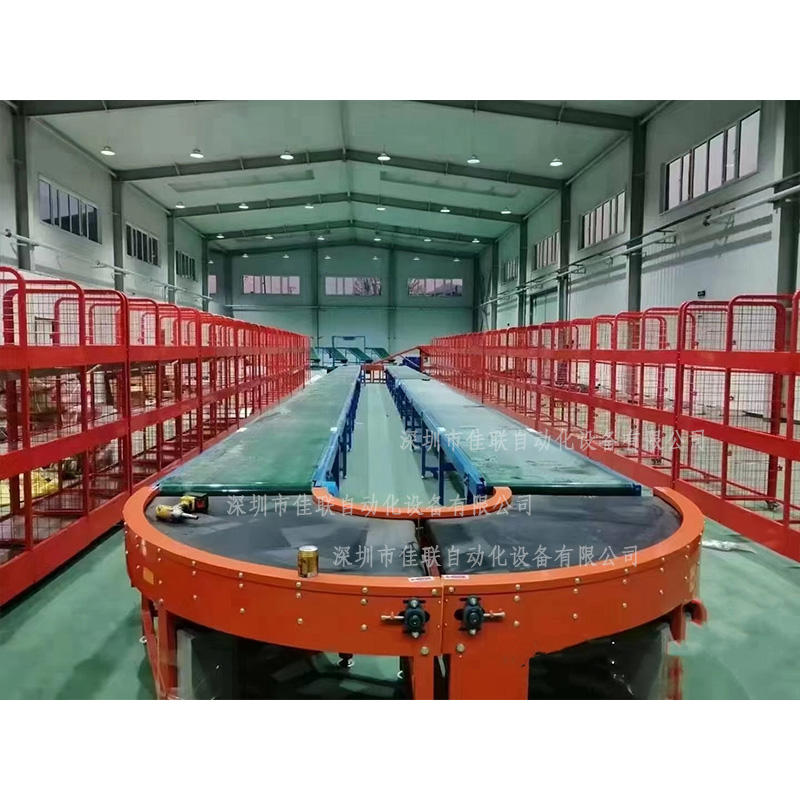
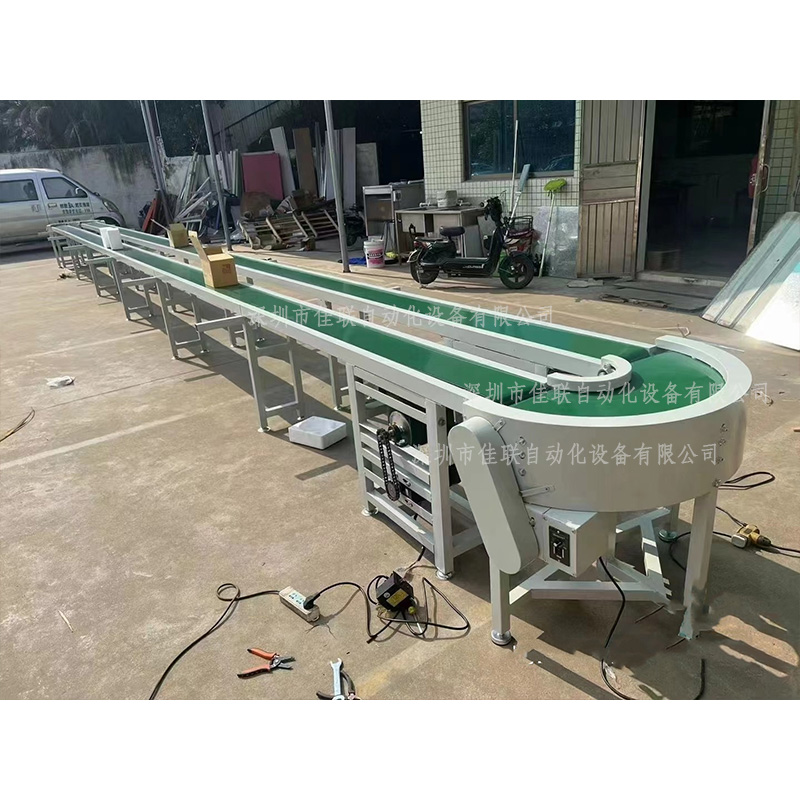
180° U-Shaped Loop Food Belt Conveyor, Logistics & Assembly Circulating Conveyor Line
Features of Belt Conveyor Line
-
The belt conveyor features simple structure, easy maintenance and lower energy consumption compared with other types of conveyors.
-
It can convey a wide variety of materials, including bulk materials, cartons, packaging bags and other light single goods. It can also be used for goods delivery at supermarket checkout counters with wide applications.
-
Various structural forms are available, including horizontal and turning belt conveyors. Attachments such as baffles, side guards and skirts can be installed on the belt to meet requirements of conveying routes, product quality and safety.
-
Special food-grade PU / PE conveyor belts are available to satisfy demands of food, pharmaceutical, daily chemical and other industries.
-
Stable operation during conveying. There is no relative movement between materials and the belt, which effectively prevents damage to conveyed goods.
-
It produces less noise than other conveyors, suitable for workplaces requiring quiet environment.
Application Scope
Widely used in transportation, assembly and packaging of spare parts in electronics, home appliances, food, automobile, motorcycle and other industries.
Technical Parameters of Belt Conveyor Line
-
Conveying types: linear workbench, independent workbench, single-side workbench, double-side workbench and workbench-free type, custom-made upon customer requirements.
-
Driving mode: motor drive.
-
Common belt width: 20~2000mm, custom sizes available.
-
Belt materials: rubber belt, PVC belt, canvas belt, food-grade belt, etc.
-
Belt types: baffle belt, side-wall belt, flat belt, anti-slip belt, etc.
-
Workbench plate size: customized as per user’s request.
-
Workbench surface: fireproof board, ordinary rubber, anti-static rubber, oil-resistant rubber, high-temperature resistant rubber.
-
Frame material: stainless steel, aluminum profile, powder-coated carbon steel, square tube, etc.
-
Conveying speed: 0.1~10 m/min; fixed speed or variable speed optional.
-
Speed regulation: frequency conversion speed control, electromagnetic speed control, electronic speed control, mechanical speed control, etc.
 WhatsApp